Perching drone · claw arm + gripper arm · prototype
PERCH
A drone that lands like a bird, switches its motors off, and keeps watching for hours instead of minutes.
A drone that lands like a bird, switches its motors off, and keeps watching for hours instead of minutes.
Every camera drone dies hovering. PERCH grabs a branch, hangs, cuts its motors, and the same battery suddenly lasts all day.
Two short arms, like a person's: the claw arm on top holds the drone, the gripper arm below does the work, driven remotely by an operator wearing a glove. Propeller guards all round, so it's safe near people and branches.
The top arm reaches up and closes its simple claw around a branch, wire or bar. The drone hangs below like a pendulum: wind swings it, it can't tip over, and holding costs zero power.
The bottom arm ends in a friendly three-finger gripper with soft rubber fingertips, mapped to an operator's glove: thumb and two fingers. Both arms tuck in during flight and unfold on approach.
Turning the motors off is only safe if the claw holds. Push the wind and change the surface: the claw lets go cleanly the moment the load passes its limit.
The operator wears a haptic glove with a sensor on every finger. Movements go over the radio link and the drone's gripper copies them; when it touches something, the glove pushes back, so you feel it. Try it: click and hold the glove.
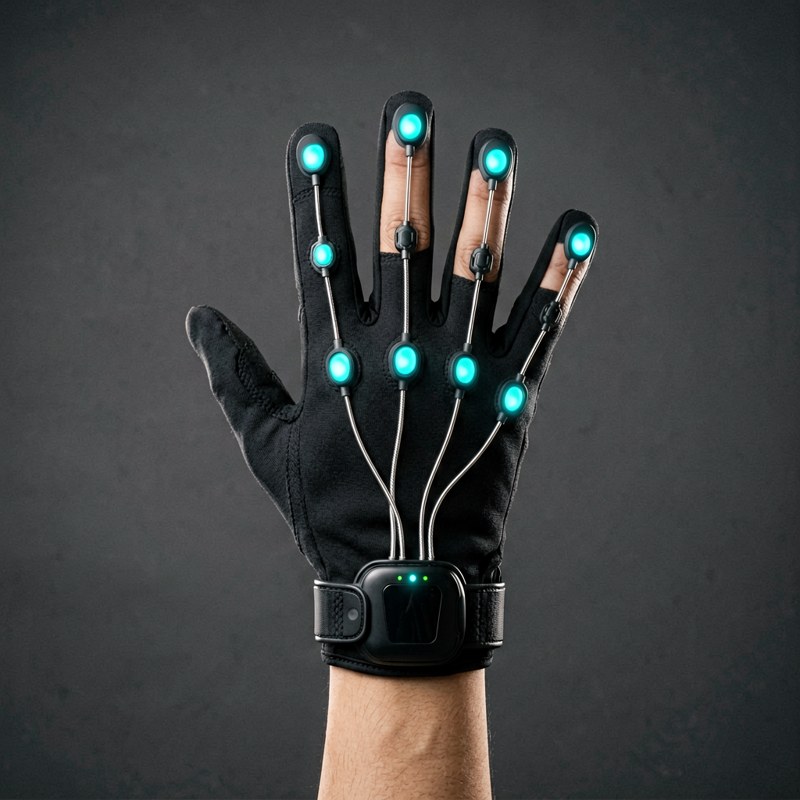

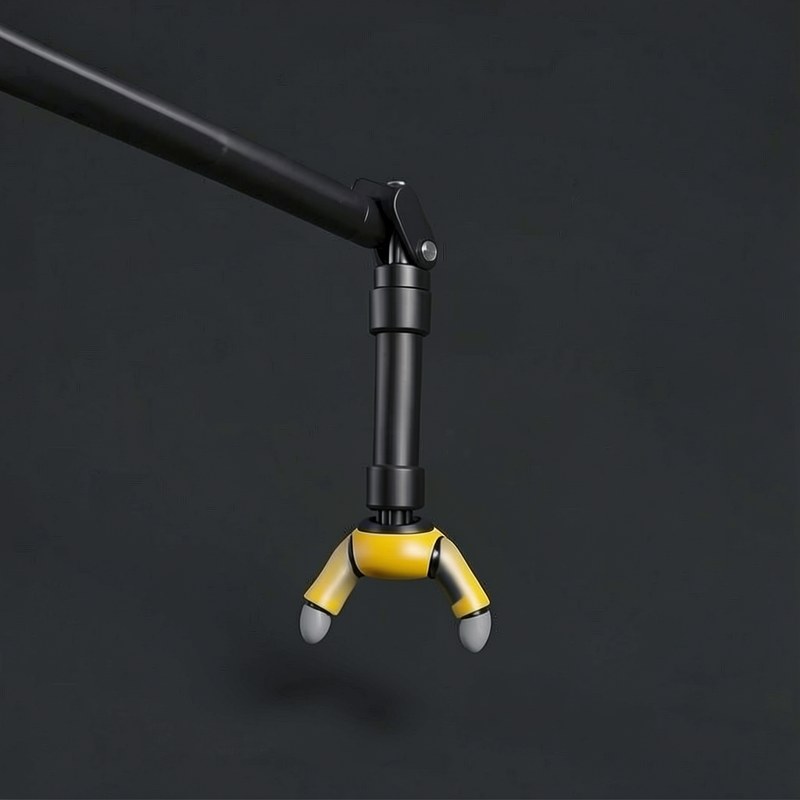

Every sensor on the glove tracks a finger. The gripper follows a split second later, and the force it feels comes back to your fingertips.
The current design as a 3D model. Drag to rotate, scroll or pinch to zoom. Yellow and black so it's seen, a roll cage and propeller guards so it's safe to fly into trees and near people.
A whole sunset or a full timelapse in one sitting, from a vantage point no tripod can reach.
Perches somewhere discreet, watches for hours and pings you on movement: property, wildlife, events.
With the glove-driven gripper: swap its own battery, move a branch, fetch something small, out where people can't go.
A mobile nest for PERCH drones. An armoured, solar-powered rover that carries the drones, charges them, swaps their tools, and drives itself to the next job. Drones that almost never have to stop.
Without ROOST: 20 hours perched on one battery. With ROOST: it lands, swaps, and keeps going.
Press "Land the drone": it flies in, tucks its arms, and lands standing on its gripper while ROOST charges it. Drag to look around.
Trims branches from where a drone can actually hang: right next to the cut, the claw holding it steady.
Concept art. ROOST is an early idea; PERCH is the working prototype.